
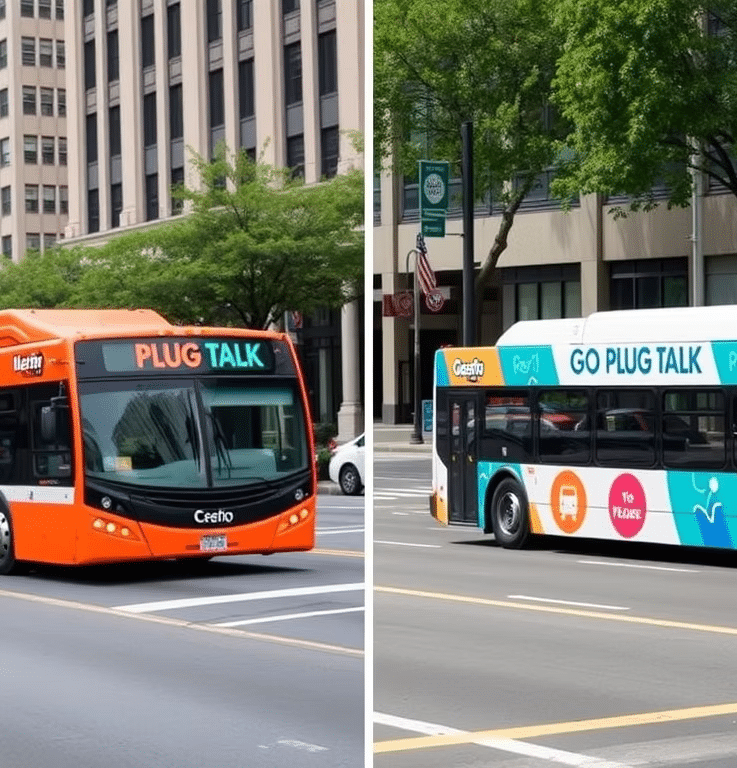
Advertising potential and customers on the go require an ad strategy that’s built around high visibility. including bus advertising and other transit placements. Bus advertising tactics make an impression on urban audiences, commuters and travelers. Advertising on transit routes and city streets also provides the opportunity to target people in a specific outdoor marketing strategy.
What Is Bus Advertising?
Advertising on a bus can take the form of a full or partial wrap, or separate pieces advertising on the inside and outer sections of the bus. Because of the advertising potential for various brands, buses can make a profit. Advertisements change daily for competition. Because buses change routes daily throughout the city, the ads are exposed to a highly diverse range of commuters.
Here are bus advertising formats to choose from:
Full Bus Wraps
The entire exterior of a bus is covered in ads. Opting to do a full bus wrap is the most eye catching for visibility and maximum exposure.
Partial Bus Wraps
Part of the bus is wrapped, and usually has addresses to bus routes and city destinations. This advertising format is cheaper, still has the same high visibility, and is better if the city has a tighter advertising budget.
Posters placed inside the bus provide advertising messages for passengers who are a captive audience.
What Are Transit Ads?
Transit advertisements include not only buses, but also subways, trains, light rail, taxis, taxi stands, and advertising within transit stations. They include printed and digital ads on billboards, as well as posters and advertisements on digital screens located in high pedestrian traffic areas. Transit advertising takes advantage of the high volume of people in metropolitan areas, who are on the move, and gives businesses a chance to reach diverse people on a frequent daily basis.
Benefits of Bus Advertising and Transit Ads
Increased Exposure: Transit ads move within busy metropolitan areas reaching thousands of potential customers each day as they pass by focused and pedestrian voic, and, reach passengers in transit advertising vehicles.
Increased Targeted Advertising: Bus and transit advertising follows a predictable route, enabling marketers to concentrate on specific neighborhoods, business areas, or high traffic zones.
Increased Profitable: Compared to other forms of advertising, transit advertising offers a greater return on advertising. Constant repetition on a daily basis occurs due to a captive audience without a high cost of advertising.
Advertising visibility stays at 24/7: No matter where bus advertising depots or parked outside buses are parked at depots, wraps and exterior advertising continue to provide visibility advertising to a Brunswick-Ontuity excursion! Depots advertise buses throughout most of the advertising.
Creative Flexibility: Campaigns can be integrated designed bright, eye-catching and stimulating to campaigns advertising digitally portraits moving and gaming! to many targeted engage audiences, city.
Effective advertising for buses.
Advertising of buses, through advertising of cycle and exposure.
While, effective campaigns bus advertising. center, advertising advertising exposure reinforced brand recall.
How advertising is done on buses along with other marketing channels like social media campaigns, radio and tv commercials to provide an integrated brand approach. Synchronizing advertising on buses with digital marketing transit campaigns, companies boosted engagement and increased conversions.
Demographic targeting: Who rides the advertising is vital. Targeting campaigns.
Unique Design:
Given that advertisements can be bold and clear design wise, there must be large letters, eye-catching illustrations, and clear photos.
Placement Strategy:
Higher impressions can be minimum with selective routes. Routes that pass by shopping centers, entertainment hubs, or districts can have a great impact.
Time and Duration:
CampaignDuration should incorporate marketing goals. Longer campaigns, with the purpose of brand awareness, should be running. In contrast, there are short campaigns scheduled with the purpose of co-marketing with launching a new product.
Effective Advertising Examples
Product Advertising:
In order to promote a product, companies often wrap the entire bus or take control of a transit station. This occurs when they want to gain attention for a new service or product.
Local Advertising:
Retail, restaurants, and service companies directly engage with neighborhoods that surround busy transit routes to target commuters.
Event Advertising:
Before and during an event, advertising is used to assist attendees in locating the event. This is common for concerts and cultural festivals, for attendees to have a seamless experience.
How to Measure the Impact of Transit Advertising.
Digital tools and analytics make it easier than ever to measure the effectiveness of transit advertising, including mobile advertisements, advertisements on the side of buses, and advertisements on the interior of buses, and the like. Advertising tailored to a specific demographic can measure engagement and conversions. Surveys and brand recall are methods available to businesses and campaigns to measure effectiveness.
Conclusion
Advertising on city buses and other forms of transit ads are great resources to reach urban dwellers. They provide an opportunity to develop campaigns that target a large audience. Visibility and mobility combine to create a repetitive advertising experience, great for targeting. Full bus wraps, mobile billboards, and digital advertising in transit stations provide businesses and brands with the opportunity to create and develop advertising campaigns to promote great awareness.
Across the United States, the versatility of transit advertising makes it incredibly economically favorable. Integrating the strategy of bus advertising along with other advertising strategies will help businesses and brands achieve great metrics for brand recall. Businesses and brands that want to target their audience and reach them wherever they are will benefit greatly from this advertising strategy.